Mahjong Game: Match Puzzle
- 4.1
- Rating
- 100.00K
- Installs
- Free
- Price

 Analysis by App-foxy
I spend a lot of time testing casual puzzle games that promise a quieter way to use a phone, and Mahjong Game: Match Puzzle caught my attention because it takes a familiar tile-matching idea and presents it as a low-pressure mental break. After playing it, I found a simple experience that is easy to understand, pleasant for short sessions, and more useful for focus than for excitement. It is not trying to replace a deep strategy game, but it can fit neatly into a spare moment when I want something structured without a demanding story or complicated controls.
The game comes from GOBLINGAMES and is available free of charge. It sits in the casual game category, carries a Teen content rating, and has reached over one hundred thousand installs. Its average score is 4.1 from around three hundred ratings, with dozens of written reviews. Those figures suggest a reasonably established audience, although I would still treat the game as a personal fit rather than assuming every player will enjoy the same pace or presentation.
How Mahjong Game: Match Puzzle feels to use
I find the appeal here less about chasing a score and more about giving my attention one clear job: comparing tiles and choosing a match at my own pace. In the next section, I’ll look at how that focused loop can make a brief break feel pleasantly deliberate, while also explaining why it may not suit someone who wants constant novelty.
You May Also Like

 Pandora - Music & Podcasts
Pandora’s Music Is Easy to Start, but Harder to Recover
Pandora’s strength is its low-effort path from a seed to a station. Its weak spot is how much confidence it asks you to place in connection, setup, and quiet recovery.

 8 Ball Pool
 Is Built on Rivalries, Rematches, and Routine
A close look at the rivalries, rematches, shared routines, and unanswered safety questions that turn a quick pool match into a persistent mobile community.

 Samsung Music
’s Quiet Strength Is Playing What You Already Own
Its reach comes less from spectacle than from dependable access to a personal library. That simplicity is both the app’s strongest retention engine and its ceiling.

 AccuWeather: Weather Radar
AccuWeather Review: A Quick, Clear Forecast for Everyday Decisions
For everyday plans, the best forecast is the one you can understand quickly. AccuWeather makes rain timing, radar, and local conditions easy to act on, with a few trade-offs.

 Hill Climb Racing
Why Hill Climb Racing Still Turns Crashes Into One More Run
A tiny car, a bumpy hill and one more upgrade: Hill Climb Racing keeps resurfacing because its simple chaos makes every near-miss feel personal.

 AliExpress - Shopping App
AliExpress Makes Global Shopping Feel Personal, but Shoppers Bear the Risk
AliExpress turns a global marketplace into a pocket-sized discovery engine. Its reach is useful, its shopping loop compelling, and its trade-offs easy to miss.
More From Our News Desk
View All News


Readability and navigation are strongest when the board stays simple
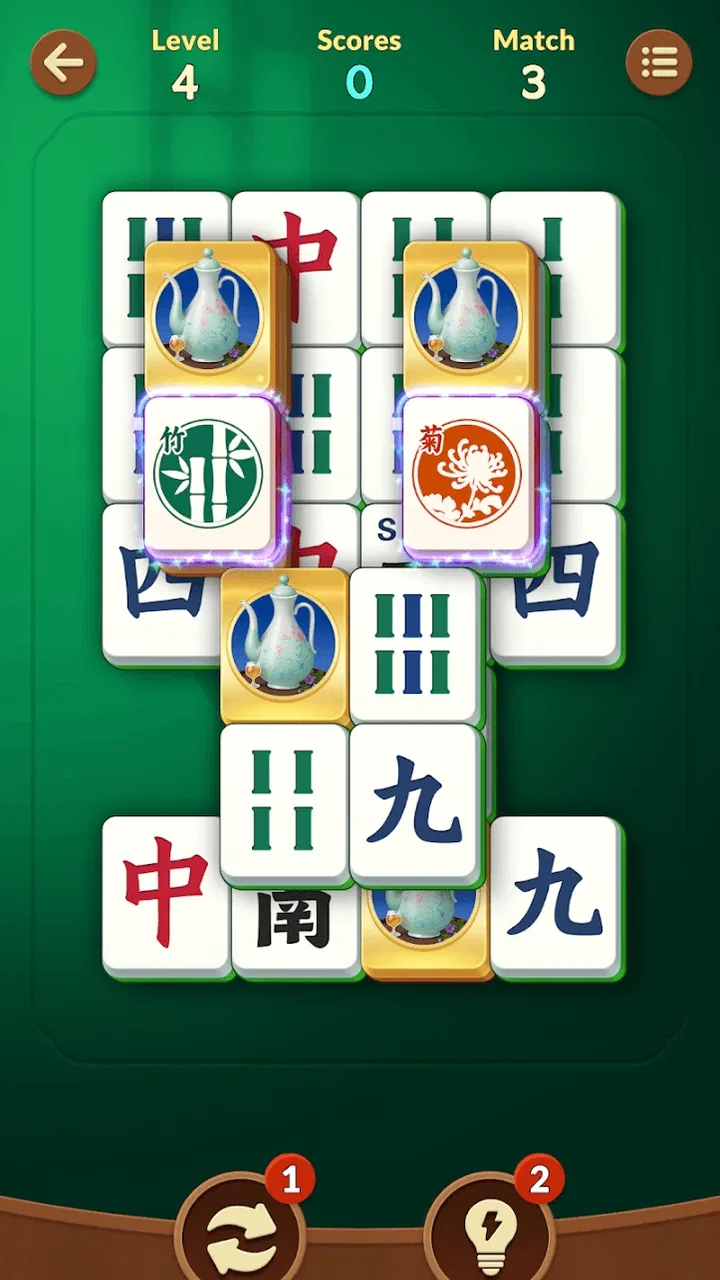
The main appeal is that the central task is immediately recognizable: I look across a collection of Mahjong-style tiles and match suitable pairs. That direct structure helps the game feel approachable. I do not have to learn a long rulebook before beginning, and the familiar visual language of tile matching makes the first session relatively comfortable even if I have not played this particular title before.
That simplicity also matters for people who prefer a clear visual routine. The board gives me one primary thing to inspect, rather than dividing attention between a character, a map, several menus, and a stream of notifications. I can focus on the available tiles, scan for possible matches, and decide whether to make a move or pause to reassess. For me, this makes the game more suitable for a calm break than many casual titles that surround a small puzzle with distracting extras.
Navigation is best understood as functional rather than elaborate. The game’s identity is built around the board itself, so I spend most of my time matching rather than moving through a large collection of screens. That is helpful when I want to start quickly. It also means the experience may feel limited to anyone who expects extensive customization, a broad progression system, or a large variety of activities inside one app.
I recommend approaching each layout with a deliberate scan instead of tapping the first pair I notice. A useful habit is to identify tiles that appear less accessible and consider whether removing a certain pair will expose them. This turns the game from a purely reflexive matching exercise into a small planning routine. It is one of the more interesting aspects of the design because the best move is not always the most obvious one.
Tile readability can depend heavily on the phone being used and on the visual complexity of the particular arrangement. On a larger display, I find it easier to compare symbols without repeatedly zooming my attention from one side of the board to the other. On a compact phone, I am more likely to pause between moves and check that two symbols really match. That is not a flaw unique to this game, but it is an important practical consideration for anyone with reduced visual acuity or difficulty distinguishing small details.
Motor and sensory considerations during a session
The touch interaction is naturally less demanding than games that require rapid swipes, repeated tapping, or precise movement. Matching tiles generally lets me choose my own pace, which is useful if quick reactions are uncomfortable or if I am playing while tired. I can inspect the board, make a considered selection, and continue without feeling that every second is a test of speed.
That said, tile matching still requires accurate touches. A player with tremors, limited reach, or difficulty making small selections may find closely positioned tiles frustrating, especially on a smaller screen. The game’s calm concept does not automatically remove the physical challenge of touching the correct target. I would suggest using the largest comfortable display available and holding the phone in a stable position rather than trying to play one-handed while walking or carrying something.
For sensory comfort, the restrained puzzle format is a better fit for me than visually crowded casual games. The board provides a consistent focus, and the activity does not depend on following a fast action sequence. This can make it suitable for a quiet evening, a waiting room, or a short decompression period after work. Still, I would not assume that every player will find the presentation equally comfortable. Tile contrast, visual density, and any on-screen effects can affect people differently, so I prefer playing in a setting where I can adjust my viewing angle and take breaks.
One practical technique is to avoid treating a puzzle as a race. I first look for pairs that are clearly available, then check whether a move opens a new area. If my eyes begin to lose track of the symbols, I stop for a few seconds instead of tapping at random. This reduces unnecessary mistakes and makes the experience more accessible to players who need additional processing time.
The game can also work as a gentle attention exercise, but I would not confuse that with a clinical tool. It gives me a bounded visual task and encourages short-term concentration, yet it does not replace professional support, therapeutic software, or a purpose-built accessibility application. Its value is everyday relaxation and light mental engagement, not medical training.
Situational access: where the game fits naturally
I can see myself opening this game during a short break when I want something more engaging than scrolling but less demanding than a competitive match. A realistic example would be a ten-minute pause between errands: I can play a little, put the phone away, and return later without needing to remember a complicated plot. That pause-friendly quality is one of its clearest strengths.
It is also a reasonable choice for players who enjoy traditional tile puzzles but do not want the pressure of a timer-driven arcade format. The matching structure gives the session a clear purpose while leaving room to think. Someone who likes organizing visual information, spotting patterns, and planning a few moves ahead may find the rhythm satisfying.
For older players or people new to mobile games, the familiar Mahjong-inspired presentation may be less intimidating than a game built around unfamiliar characters or elaborate controls. However, I would still recommend trying it on the intended device before assuming it will be comfortable. Familiar rules help, but screen size and tile clarity can matter just as much as the underlying concept.
The game is less convincing as a shared social activity. Its appeal is personal concentration rather than conversation, teamwork, or competition with friends. If I want a game to play alongside another person, I would look toward a title designed around multiplayer interaction. If I want a lengthy solo challenge with a strong sense of progression, I would choose a more feature-rich puzzle game instead.
Its free price makes experimenting easy, particularly for someone who wants to see whether this style of matching suits them before committing money. I still think the best way to judge it is to play several short sessions under different conditions: once with full attention, once during a quiet break, and once on the smallest screen I regularly use. That quickly reveals whether the board remains readable and whether the pace feels relaxing or repetitive.
What may still create barriers
The same focused design that makes the game approachable can also make it feel narrow. I do not come to it for a rich narrative, a large strategic system, or a wide range of modes. Players who need constant novelty may run out of interest sooner than players who enjoy repeating a familiar mental routine. The game works best when I accept its modest scope instead of expecting a full-scale Mahjong simulation.
Visual matching is another unavoidable barrier. Anyone who struggles with small symbols, subtle differences, or crowded arrangements may need more time than the interface seems to expect. I would have liked clearer control over presentation, such as more ways to adapt the board for different visual needs, but I would not claim that such options are present unless I can verify them. For now, the sensible workaround is environmental: use a larger screen, improve lighting, keep the device steady, and stop before visual fatigue builds.
Touch accuracy can create a similar problem. A player may understand the puzzle perfectly yet still miss a tile because the target is small or because two choices are close together. That distinction matters: the game may be mentally accessible while remaining physically awkward for some users. A slower pace helps, but it cannot solve every limitation of mobile touch input.
Attention can also be affected by context. In a noisy place, while commuting, or during a task that requires frequent interruptions, the board may become harder to follow. I would not use it while walking, crossing roads, or handling anything that needs full awareness. Its calm nature makes it suitable for a seated pause, not for multitasking in situations where the phone competes with safety or responsibility.
The Teen rating is worth keeping in mind for households choosing games for younger children. It does not make the title unsuitable for every teenager, but parents should check the on-device experience themselves if age suitability is important. I would also recommend that anyone sensitive to screen fatigue set a personal session limit, because a relaxing puzzle can still encourage longer phone use than intended.
Version, device fit, and everyday expectations
The current version is 1.1.0, and the game requires Android 8.0 or later. That makes the operating-system requirement fairly approachable for many Android users, but compatibility is not the same as comfort. A phone may run the game while still offering a cramped board or making symbols difficult to inspect. I would prioritize display size and touch responsiveness when deciding whether it is worth installing.
Because it is free, the initial decision is low risk. The more important question is whether the game’s particular style of calm matching gives me enough variety to return to it. I would not install it expecting a collection of unrelated puzzles. I would install it because I want this specific kind of tile-focused activity and appreciate being able to begin without a financial commitment.
One useful workflow is to treat it as a reset between demanding tasks. I can play one board, deliberately stop, and use the transition to clear my head before returning to work or study. Another is to use it as a screen activity that does not require audio or a large amount of text, provided the visual board is comfortable for me. These are small use cases, but they explain its appeal better than calling it simply “relaxing.”
Compared with a traditional Mahjong app, this game is more attractive to someone who wants straightforward matching rather than a complete rule-based table game. Compared with a fast match-three title, it is less about speed and cascading rewards and more about scanning, selection, and restraint. Compared with a minimalist meditation app, it offers a concrete task instead of passive breathing or reflection. Those differences help me place it accurately: it is a quiet puzzle, not a meditation replacement, a social game, or a competitive reflex test.
The best accessibility advantage here is control over attention rather than a large collection of specialized tools. I can slow down, inspect the board, and choose when to stop. That will help players who benefit from self-paced interaction, but it will not fully address visual or motor limitations. Anyone needing screen-reader-first navigation, extensive contrast controls, or highly adaptable input should investigate a different kind of app designed around those needs.
My inclusive verdict after playing
I recommend Mahjong Game: Match Puzzle to people who want a free, uncomplicated tile puzzle for quiet individual sessions. Its clear central activity, familiar structure, and self-paced feel make it approachable for many casual players. I especially like it as a short break game: it gives my attention something specific to do without asking me to memorize a story, compete with strangers, or master complicated controls.
I would be more cautious about recommending it to anyone who needs strong visual customization, has difficulty with small touch targets, or wants a broad range of accessibility settings. The game can be gentle in pace while still demanding visual scanning and accurate taps. That distinction is important, and it is why I would test it personally on the device that will be used most often.
GOBLINGAMES has chosen a focused direction rather than an overloaded one. In my experience, that focus is both the reason the game feels calm and the reason some players may find it repetitive. The 4.1 average and audience of over one hundred thousand installs show that it has found interest among casual mobile players, but the numbers do not change the central trade-off: this is best for people who enjoy a narrow, deliberate puzzle loop.
My final recommendation is simple. If you like Mahjong-style matching, prefer a slower pace, and want something to play during a seated pause, it is worth trying. If you need competitive depth, rich social features, extensive visual adaptation, or a game that stays exciting through constant variety, I would choose another option. For the right player, this is a modest but useful way to give the mind a quiet, organized task.
FAQs for Mahjong Game: Match Puzzle
01What are the main features of Mahjong Game: Match Puzzle?
Mahjong Game: Match Puzzle offers a variety of enjoyable features including multiple difficulty levels, daily challenges, and a collection of unique tile sets. The game also includes a hint system to help players when they're stuck, as well as an option to shuffle the board. With its intuitive controls and soothing background music, it provides a relaxing gaming experience.
02Is Mahjong Game: Match Puzzle suitable for beginners?
Yes, Mahjong Game: Match Puzzle is designed to be accessible for players of all skill levels. It includes a comprehensive tutorial that guides new players through the basics of the game. Additionally, the hint feature is perfect for beginners who may need extra assistance while learning the ropes.
03Does Mahjong Game: Match Puzzle require an internet connection?
Mahjong Game: Match Puzzle can be played offline, making it a great option for users who do not always have access to the internet. However, certain features like daily challenges and leaderboards may require an internet connection to function properly.
04Are there in-app purchases in Mahjong Game: Match Puzzle?
Yes, the game includes optional in-app purchases. Players can buy various items like new tile sets or hints to enhance their gameplay experience. However, these purchases are not necessary to enjoy the full game, as all essential features are available for free.
05How does Mahjong Game: Match Puzzle support player progress?
The game automatically saves your progress, allowing you to pick up right where you left off. It also features a level progression system that tracks your achievements and improvements over time. This ensures that players can continually challenge themselves and enjoy a rewarding gaming experience.
Pros
- Engaging and intuitive gameplay mechanics.
- Beautifully designed graphics and themes.
- Variety of levels keeps interest high.
- Smooth controls enhance user experience.
- Regular updates with new challenges.
Cons
- In-app purchases can be pricey.
- Advertisements interrupt gameplay.
- Requires internet for some features.
- Limited customization options available.
- Battery consumption is relatively high.

Mahjong Game: Match Puzzle
Gallery